


 Posts
Posts


A couple months ago my good friend wrote an anti-abortion song called "Beating Heart." It's a moving song. My sister put a music video together shortly before the New Year and she did an amazing job.
It brings me to tears anytime I watch it. So incredibly sad that so many people are so cruel and heartless.
I'd encourage everyone to watch it, although it's not for the faint-hearted.

Tweet
Monday, January 28, 2013
Beating Heart/Who Do You Think You Are? Music Video

Thursday, January 24, 2013
Recipe: Oat & Almond Flour Chocolate Chip Cookies
I know it's been a little bit since I last blogged. But, I'm working on getting back into the routine, Lord willing. So, I thought I'd start out with a yummy new recipe that I tried.
Everything is gluten-free at our house, because there are too many with allergies to wheat. We normally use rice flour for baking. But, have been using a lot of oat flour lately due to waiting on the co-op order to arrive for the rice flour. Almond flour is another flour we keep on hand around here most of the time for my 20 year old brother who is on a mostly-grain-free diet (he was on the GAPS diet, but has started adding certain foods back in over the past couple months, since it's been a good 18 months on GAPS)
Anyways, I had some leftover Almond Flour from our New Year's party because I was unable to finish making all the cookies I was going to make for the party (due to getting sick). I also had a bag of peppermint/chocolate chips. So, I looked up almond & oat flour chocolate chip cookies. One of the recipes I found looked like it would be good and I could alter it enough to make it work with what we had in the house. The end result: The cookies turned out fabulous and the recipe is definitely a keeper!
Oat & Almond Flour Chocolate Chip Cookies
Yield: (I doubled the recipe, it made 6 1/2 dozen)
*remember there is a Printer-Friendly button on the bottom of each blog post.

Ingredients:
1 1/3 Cup Oat Flour (we make our own by grinding oatmeal in our Vita-Mix)
1 Cup Almond Flour
1/2 Teaspoon Baking Soda
1/4 Teaspoon Salt
1 Tablespoon Flax Meal
3/4 Cup Brown Sugar
1/4 Cup Water
1/3 Cup Oil
2 Tablespoons Vanilla
1 Cup Chocolate Chips
Directions:
1. Combine all the dry ingredients & mix together.


2. Add wet ingredients (water, oil & vanilla) & mix together.

3. Add the wet ingredients to the dry ingredients and mix until all combined.
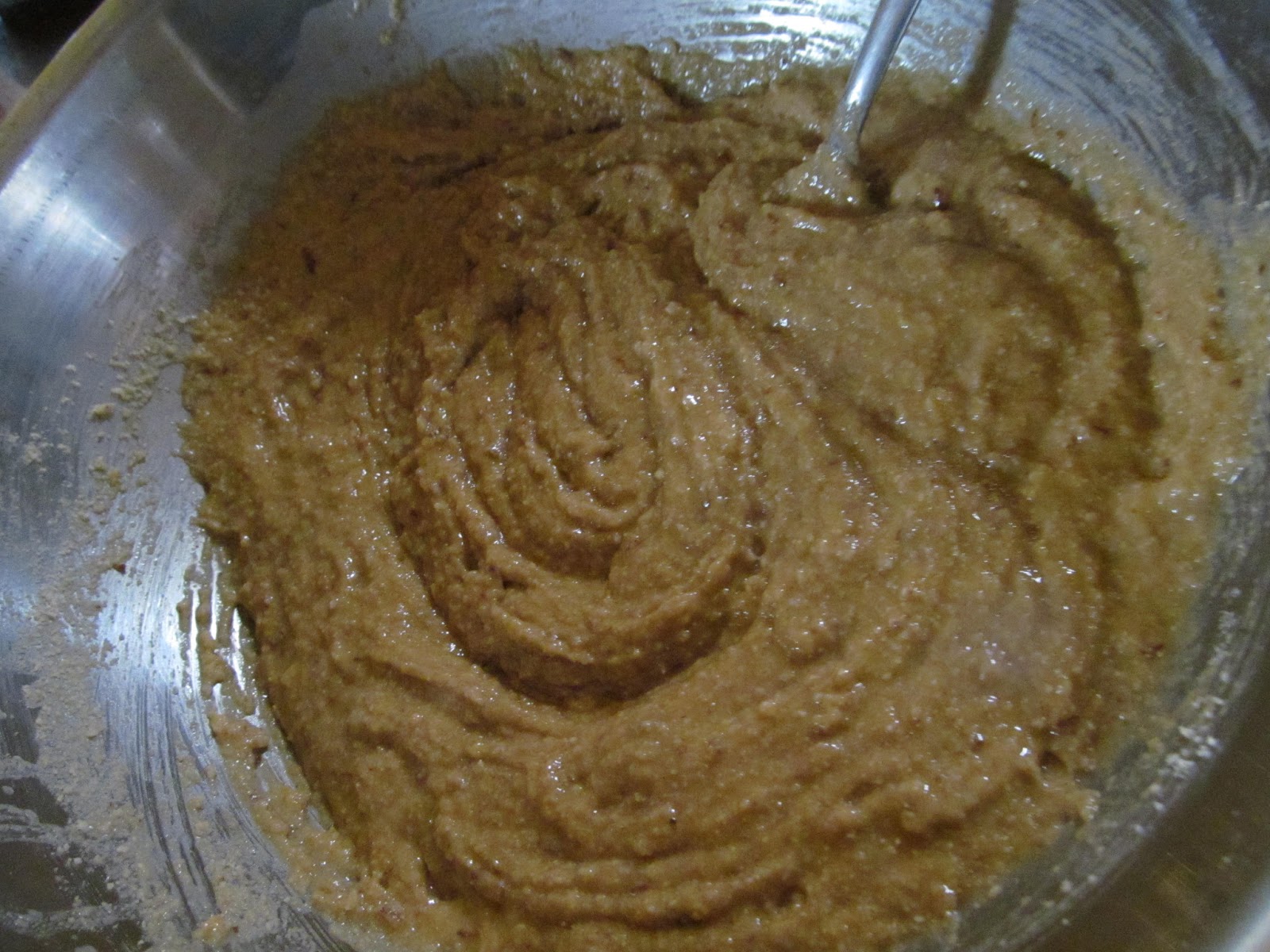
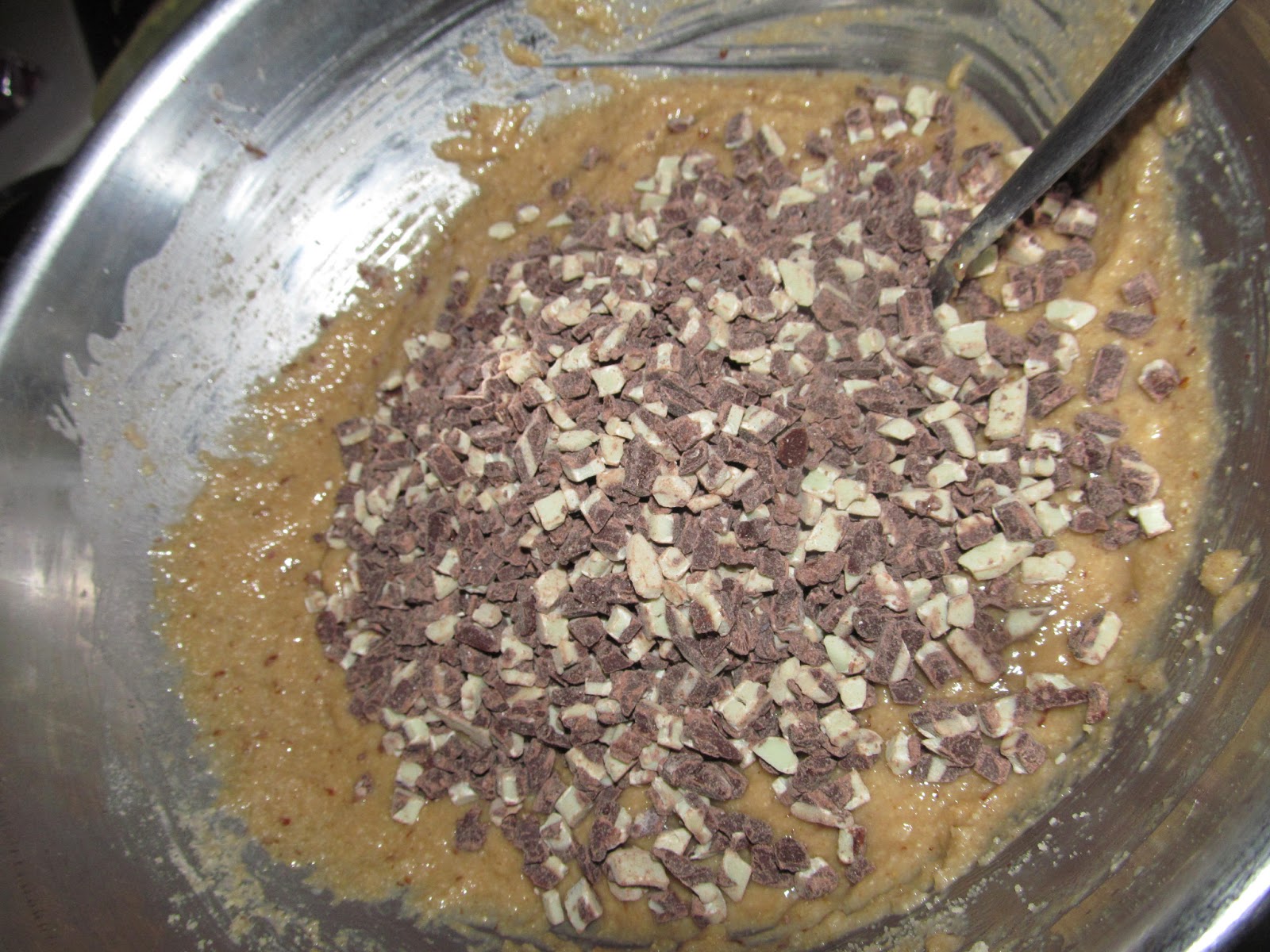
4. Add the chocolate chips and mix until well combined. I used peppermint/chocolate chips and they were AMAZING!

5. Place on cookie sheets and bake at 375 for 12-15 minutes or until the edges of the cookies are golden brown. Remove from pan, place on cooling rack and let set for 10-15 minutes.

(As a side note: These cookies are also good if you do not add any chips to them. I set aside some of the dough and added chocolate to it for O, because he cannot have the chocolate chips due to the dairy in them.)

(Original recipe was found here, but I revised a lot of it).
Enjoy!
Tweet
Friday, November 9, 2012
Interesting Research done at University of Washington
Extra chromosome 21 removed from Down syndrome cell line
University of Washington scientists have succeeded in removing the extra copy of chromosome 21 in cell cultures derived from a person with Down syndrome, a condition in which the body’s cells contain three copies of chromosome 21 rather than the usual pair.
A triplicate of any chromosome is a serious genetic abnormality called a trisomy. Trisomies account for almost one-quarter of pregnancy loss from spontaneous miscarriages, according to the research team. Besides Down syndrome (trisomy 21), some other human trisomies are extra Y or X chromosomes, and Edwards syndrome (trisomy 18) and Patau syndrome (trisomy 13), both of which have extremely high newborn fatality rates.
In their report appearing in the Nov. 2 edition of Cell Stem Cell, a team led by Dr. Li B. Li of the UW Department of Medicine described how they corrected trisomy 21 in human cell lines they grew in the lab. The senior scientists on the project were gene therapy researchers Dr. David W. Russell, professor of medicine and biochemistry, and Dr. Thalia Papayannopoulou, professor of medicine.
The targeted removal of a human trisomy, they noted, could have both clinical and research applications.
In live births, Down syndrome is the most frequent trisomy. The condition has characteristic eye, facial and hand features, and can cause many medical problems, including heart defects, impaired intellect, premature aging and dementia, and certain forms of leukemia, a type of blood cancer.
“We are certainly not proposing that the method we describe would lead to a treatment for Down syndrome,” Russell said. “What we are looking at is the possibility that medical scientists could create cell therapies for some of the blood-forming disorders that accompany Down syndrome.”
For example, he said, someday Down syndrome leukemia patients might have stem cells derived their own cells, and have the trisomy corrected in these lab-cultured cells. They could then receive a transplant of their own stem cells – minus the extra chromosome – or healthy blood cells created from their fixed stem cells and that therefore don’t promote leukemia, as part of their cancer care.
He added that the ability to generate stem cells with and without trisomy 21 from the same person could lead to better understanding of how problems tied to Down syndrome originate. The cell lines would be genetically identical, except for the extra chromosome. Researcher could contrast, for example how the two cell lines formed brain nerve cells, to learn the effects of trisomy 21 on neuron development, which might offer insights into the lifelong cognitive impairments and adulthood mental decline of Down syndrome. Similar comparative approaches could seek the underpinnings of untimely aging or defective heart tissue in this genetic condition.
The formation of trisomies is also a problem in regenerative medicine research using stem cells. Russell and his team observed that their approach could also be used to revert the unwanted trisomies that often arise in creating stem cell cultures.
Figuring out the exact techniques for removing the extra chromosome was tricky, Russell said, but his colleague Li worked hard to solve several challenges during his first attempts at deriving the engineered cell lines.
“Dr. Li’s achievement was a tour de force,” Russell said.
The researchers used an adeno-associated virus as a vehicle to deliver a foreign gene called TKNEO into a particular spot on chromosome 21, precisely within a gene called APP, which sits on the long arm of the chromosome. The TKNEO transgene was chosen because of its predicted response to positive and negative selection in specific laboratory growth mediums. When grown in conditions that selected against TKNEO, the most common reason for cells to survive was the spontaneous loss of the chromosome 21 harboring the transferred gene. Other survival tactics were point mutations, which are single, tiny alterations in DNA base pairs; gene silencing, which meant TKNEO was “turned off” by the cell; or deletion of the TKNEO.
Russell explained a key advantage of this technique for getting rid of the entire extra chromosome: Once it was gone, nothing was left behind.
“Gene therapy researchers have to be careful that their approaches do not cause gene toxicity,” he said. This means, for example, that removal of a chromosome must not break or rearrange the remaining genetic code. This method shouldn’t do that.”
Other researchers on this study were Kai-Hsin Chang, Pei-Rong Wang and Roli K. Hirata. The project was supported by grants from Horizon Discovery and from the National Institutes of Health (DK55759, HL53750,GM086497, DK077864, and HL46557.) The researchers declared no financial conflicts of interest.
Tweet
Thursday, November 1, 2012
Dr. Julia Kinder & A Petition to Medical Schools
I received an email about 10 days ago and just kept forgetting to look at it with much detail. I took a look at it today and while it's not Down Syndrome Awareness Month still, thought it would be good to share nonetheless.
Celebrate the UPside of Down™ during National Down Syndrome
Awareness Month: Dispelling Myths and
Smashing Stereotypes
Dr. Julia Kinder is celebrating National Down Syndrome
Awareness Month with a Sweepstakes,
Photo Contest, and a Petition to Medical School Faculty
across the United States.
Cape
Girardeau, MO – October 18, 2012 – Dr. Julia Kinder, practicing
physician, national speaker, and an advocate for children with special needs,
is celebrating National Down Syndrome Awareness Month with an online Photo
Contest, Sweepstakes, and a very important Petition. These can be found on her
website, www.JuliaKinder.com. The photo
contest gives families of children with Down syndrome an avenue for showcasing
their child’s abilities. The sweepstakes offers fun awareness products created
by Dr. Kinder while drawing attention to dispelling the myths and stereotypes
surrounding Down syndrome. The newly
launched petition calls upon medical schools to provide more training on Down
syndrome.
“No parent should
feel like their baby's life starts out with a death; the death of their dreams
for the future, the end of their hope for a happy, healthy child,” said Dr.
Kinder, owner of JuliaKinder.com. “But it happens every day, because physicians
who deliver the diagnosis of Down syndrome often give inaccurate, incomplete,
and negative information that intensifies the unfounded fear of this
diagnosis.”
Currently physicians
do not receive training on giving the diagnosis of Down syndrome in a
productive way, according to Dr. Kinder. Nor do they learn of needed resources
for parents and baby. Medical education focuses on the possible health and
learning issues, which not every child will encounter. Physicians do not
understand what a child with Down syndrome is like outside of the medical
aspects. What is crucial to every baby with Down syndrome is that they begin
receiving early intervention and therapy immediately. Medical education does
not cover this topic, therefore, physicians are missing a crucial piece of
information to pass along to new parents.
Dr. Kinder has
been a practicing physician for the past decade. However, eight years ago when her daughter was born with Down
syndrome, she discovered her medical training did nothing to prepare her for
raising a child with Down syndrome.
“Ella is
completely healthy and smart, which contradicts everything I learned about Down
syndrome,” said Dr. Kinder. “Medical school taught me about a laundry list of
health problems and mental retardation, none of which applied to my child. I
had no practical information on how to take care of her. I didn’t know she
needed to start therapy immediately. When she was born, the doctors and
hospital gave me no information or resources. I left the hospital without so
much as a pamphlet.”
According to Dr.
Kinder, the information on Down syndrome that doctors give to new parents tends
to focus on the potential medical and learning problems. Doctors have not been
trained to explain to these new parents that a child with Down syndrome is more
like other children than they are different, and that many of the medical
issues never materialize. Parents leave the hospital with the impression that
their child’s prospects for a happy, healthy, and fulfilled life are grim.
Unfortunately, many parents admit they struggled to connect emotionally with
their baby during those first few months, as if unconsciously attempting to
prepare for some awful manifestation of the diagnosis.
“I have decided to
tackle this issue head-on,” states Dr. Kinder. “It is unacceptable for the
medical community to contribute to a new parent’s fear of their own baby. This
negative emotional state can prevent parents from providing the appropriate
care their newborn needs. Babies with Down syndrome must start early intervention
and therapy immediately - it should not be delayed because doctors fail to give
parents complete and accurate information, along with resources for support.”
Dr. Kinder has
spent eight years speaking to the medical community, future teachers and
therapists, and to the general public regarding Down syndrome, as
well as counseled hundreds of new parents. In 2009 Dr. Kinder began blogging on
the topic, giving new parents hope and direction. She has devised fun ways to dispel the myths and darkness by promoting
positive phrases such as “My kid has more Chromosomes than yours” as well as
the “UPside of Down” concept. She encourages others to proudly display the
UPside of Down with car decals, shirts, bracelets, and other awareness products
that she has developed. Dr. Kinder has
created
a tribe of families who support each other and spread awareness. Their motto
is, “Go beyond just surviving [with Down syndrome] to Thriving - become a
Thrivalist!”
“I want to show
the world the UPside of Down syndrome and I want to improve the education
medical students receive on helping new parents,” said Dr. Kinder. “My ultimate
goal is for the birth of every baby with Down syndrome to be celebrated, and
for every baby to receive the care required to maximize their developmental
potential.”
To get involved
and sign Dr. Kinder’s petition please go to www.JuliaKinder.com/petition/. To learn more
about her website’s Down Syndrome
Awareness Month activities and to participate in the
celebration, please visit http://www.JuliaKinder.com/DownSyndromeCelebration/.
About Dr. Julia Kinder
Dr.
Julia A. Pewitt Kinder is an accomplished national speaker, early childhood
education advocate, author and practicing physician. She and husband Mitch
reside in Cape Girardeau, Mo., with their three children, Ella and twin boys
Paxton and Dexter. Dr. Kinder is
licensed to practice in both Missouri and Texas and is in private practice with
her brother in Jackson, Missouri. She also serves as a hospice physician for
Tri-County Hospice. In addition, Dr. Kinder is a certified fitness instructor
and promotes easy ways to incorporate exercise into daily routines. More
information about Dr. Kinder can be found on her website at www.JuliaKinder.com.
Tweet
Wednesday, October 31, 2012
31 for 21: Oxidative Stress & Down Syndrome
Well, 31 for 21 is coming to a close. I didn't get nearly as many "in-depth" posts up as I may have liked. So, I'll just have to work on that over the next few months :).
Today, I wanted to share a study that came across a DS listserv the other day on Oxidative Stress and Down syndrome.
Oxidative Stress and Down Syndrome: A Route toward Alzheimer-Like Dementia
You can view the full text of the report here.
I wanted to point out a few quotes from the conclusion.
It's already a well established fact that there is increased oxidative stress in Down syndrome, just like this points out.
"Within the context of the reported findings discussed above, we hypothesize that trisomy affects gene/protein expression that results in increased OS conditions and impaired mitochondrial function. These alterations occur early in DS as demonstrated by studies performed on fetal brain and amniotic fluid from DS pregnancy and play an important role in neurodegeneration."
This is true below and a lot of people may not realize it. It's not just that the overexpression of SOD1 causes increased oxidative stress. It also reduces levels of agents that would counter act that oxidative stress and lowers the antioxidant enzymes.
"OS conditions arise not only from overexpression of SOD1 but also as a consequence of low levels of reducing agents and antioxidant enzymes."Just thought this was an interesting statement:
"It is now well accepted that OS contribute to neurodegeneration, but in the case of DS and AD, genetic similarities, due to the fact that some of the genes responsible for familial form of AD are encoded by Chr21, provide an interesting field of research for the comprehension of many yet unsolved issues."This is exactly why targeted nutritional intervention is so entirely important for individuals with DS. We have to combat the low antioxidant levels in DS with plenty of antioxidants!
"Based on this notion, it is possible that using antioxidant nutrients to scavenge oxygen-derived free radicals may modulate some of the complications of DS. "
Tweet
Tuesday, October 30, 2012
31 for 21: Life On The Ranch, Last Night with the Grandparents
Today was the last day for my Granny from California with her 3 week visit. So, a few of us had to go drop her off at the airport. My other grandparents from California will be leaving soon also, so it was time to spend the last little while with them before they left also. That meant we had a family BBQ tonight.
It was a beautiful, still night, perfect temperature, with a full moon and a great time around the campfire. Truly blessed and thankful!


Tweet
Monday, October 29, 2012
31 for 21: Getting late
Well, it's getting late here and I just want to get a post up for the night. Grandparents have been here for almost a month and will be leaving soon. We attended a debate tonight with our congressional candidates.
The fall weather is nice and so I'll just share a few pictures for tonight!


Tweet
Sunday, October 28, 2012
31 for 21: The "R" Word Controversy
Being in the special needs community for almost 8 years now, I am fully aware of all the 'Politically Correct' lingo that should be used. You know, you say "a child with Down syndrome", not a "Down syndrome child." And there are also certain words which just are not supposed to be said, the word "retard" being at the top of the list.
It took some getting used to for me, because my family has never been very "politically correct" :).
Over the years I've seen the issues that come up when certain popular individuals use the "R" word, when someone who has a child with DS has a friend say this word in a conversation, or when it's use is discussed on a forum. I've never said much about it, because I think a lot of people will have a problem with my view on it.
Last week though, Ann Coulter called President Obama a "retard" on Twitter. There has been a ton of outrage over her use of the "R" word. So, I feel it's time that I say something. I fully expect people to disagree with me, but I'm completely fine with that.
First and foremost, the First Amendment to the Constitution gives us, as Americans, freedom of speech. We should all have the freedom to use whatever words we want to. If someone is offended by a word, then apologize. But it should not be turned into this national campaign to "ban" the use of certain words. That's simply against the first amendment.
When people go on "campaigns" to stop the use of a word, promote "gay rights", advocate for "women's rights", etc, it becomes something that is part of the problem that our nation is in - people thinking that government is the answer.
Besides the above reasons as to why the "R" word should not be an issue, let's look at a little more technical things.
What is the definition of the word "retard"? According to Merriam-Websters it is:
to make slow; delay the development or progress of (an action, process, etc.); hinder or impede.
When I think of this word, I think of it's true meaning. Just like the medical books will use it for "retarded growth" (slow growth) or "mental retardation" (slow mental development).
I wonder if people who have children with Down syndrome get so upset about the use of this word, because they don't want to accept the fact that their child with Down syndrome does learn at a slower level? Or often times do grow/mature at a slower rate? I know full well that my brother, O, learns at a much slower pace than his twin sister who does not have DS. Is there something bad about that? No, not at all.
Another way people explain this word is that it refers to individuals with a lower I.Q. This again brings me to the point above. If my brother has a lower I.Q., does it matter? No, it doesn't. Just because someone may have a lower I.Q. does not mean they are stupid.
I've often heard that if someone says the word "retard," they are insulting your child or loved one with DS because they are calling them "stupid" or "worthless." You know what, I don't think so. I don't view my brother with DS as "stupid" or "worthless," so I don't even equate that to him. Just because someone uses this word that has been used in correlation with special needs in a way other than the proper use, does not mean they are "putting down" someone with special needs.
Not that I am defending Ann Coulter here at all, but I think she brought up an interesting point when she was discussing this on the Piers Morgan show. I have no problem with the word "retard" being used with the definition above. Languages do change though, so *if* the word does not mean the above definition (I'm not saying it does), and society has changed it to meaning "loser", then let go of the word. It's not applying to your child. It's being applied to something totally different!
There's been a few times over the years that I or my family have encountered someone using the "R" word in their conversation with us. What do we do with it? Do we get all angry or tweaked out about it? No, we use it as a chance to educate them. We make it a light thing, because I don't want them to feel bad for using the word around me, because it doesn't offend me. We tell them it does offend a lot of people. And we also tell them the actual meaning of the word (slow) and how it's not really that bad of a thing.
Do I go around saying the word all the time? No, because I know it causes great offense in the special needs community.
My brother is not stupid. He's a smart little guy, even though he may have a lower I.Q. (could care less about I.Q. tests though) or learn things at a slower rate.
Bottom line though, I think people need to be less sensitive. It's simply a word. When people read into the motives as to why an individual would use a certain word (to hurt the special needs community), it gets us into all sorts of problems.
Let the word go. Don't let it offend you. Educate people.
Tweet
Saturday, October 27, 2012
31 for 21: Full day.
Well, I have a few topics I'd like to blog about, but it's getting super late, so it'll have to wait! I'll just share this video, which I've watched a few times and cried I think each time :(!
Tweet
Friday, October 26, 2012
31 for 21: Professor Feuerstein & a new Documentary on Down Syndrome
I received the following information from someone I know and I thought I would share it:
Professor Feuerstein from Israel is a psychologist who has helped many people. Emily Kingsley, mother of Jason Kingsley, gives much credit to Professor Feuerstein and his teaching methods in helping her son who was born with Down syndrome progress and become a successful person. She writes:
Emily Perl Kingsley writes:
The self-sacrificing work of Professor Feuerstein to enhance the learning potential of children across the globe is legendary. Now approaching 90 years of age, he has devoted a lifetime of service to children previously thought to be unteachable and has shown the world that all children can learn and become productive, contributing citizens.
Professor Feuerstein's innovative methods have been adopted world-wide and have revolutionized the way we think about children's potential to be mediated and taught.
I am grateful to the Professor on many levels. My own son, who has Down syndrome, studied with Professor Feuerstein and while previously diagnosed as "profoundly retarded," went on to be able to achieve a full academic high school diploma and write and publish a book about his experiences growing up with Down syndrome. I attribute this in very large part to the ability to think logically which he learned at the hand of Professor Feuerstein. I believe that the work that he did with Professor Feuerstein was the most important educational work he ever did in his entire educational career. The Professor literally taught my son how to think!
And my son is only one of thousands and thousands of children directly affected by Professor Feuerstein's remarkable techniques and amazing influence.
Tweet
Subscribe to:
Posts (Atom)
