Showing posts with label gaps diet. Show all posts

Thursday, January 24, 2013

Recipe: Oat & Almond Flour Chocolate Chip Cookies

I know it's been a little bit since I last blogged. But, I'm working on getting back into the routine, Lord willing. So, I thought I'd start out with a yummy new recipe that I tried.

Everything is gluten-free at our house, because there are too many with allergies to wheat. We normally use rice flour for baking. But, have been using a lot of oat flour lately due to waiting on the co-op order to arrive for the rice flour. Almond flour is another flour we keep on hand around here most of the time for my 20 year old brother who is on a mostly-grain-free diet (he was on the GAPS diet, but has started adding certain foods back in over the past couple months, since it's been a good 18 months on GAPS)

Anyways, I had some leftover Almond Flour from our New Year's party because I was unable to finish making all the cookies I was going to make for the party (due to getting sick). I also had a bag of peppermint/chocolate chips. So, I looked up almond & oat flour chocolate chip cookies. One of the recipes I found looked like it would be good and I could alter it enough to make it work with what we had in the house. The end result: The cookies turned out fabulous and the recipe is definitely a keeper!

Oat & Almond Flour Chocolate Chip Cookies
Yield: (I doubled the recipe, it made 6 1/2 dozen)
*remember there is a Printer-Friendly button on the bottom of each blog post.


Ingredients:
1 1/3 Cup Oat Flour (we make our own by grinding oatmeal in our Vita-Mix)
1 Cup Almond Flour
1/2 Teaspoon Baking Soda
1/4 Teaspoon Salt
1 Tablespoon Flax Meal
3/4 Cup Brown Sugar
1/4 Cup Water
1/3 Cup Oil
2 Tablespoons Vanilla
1 Cup Chocolate Chips

Directions:

1.  Combine all the dry ingredients & mix together.


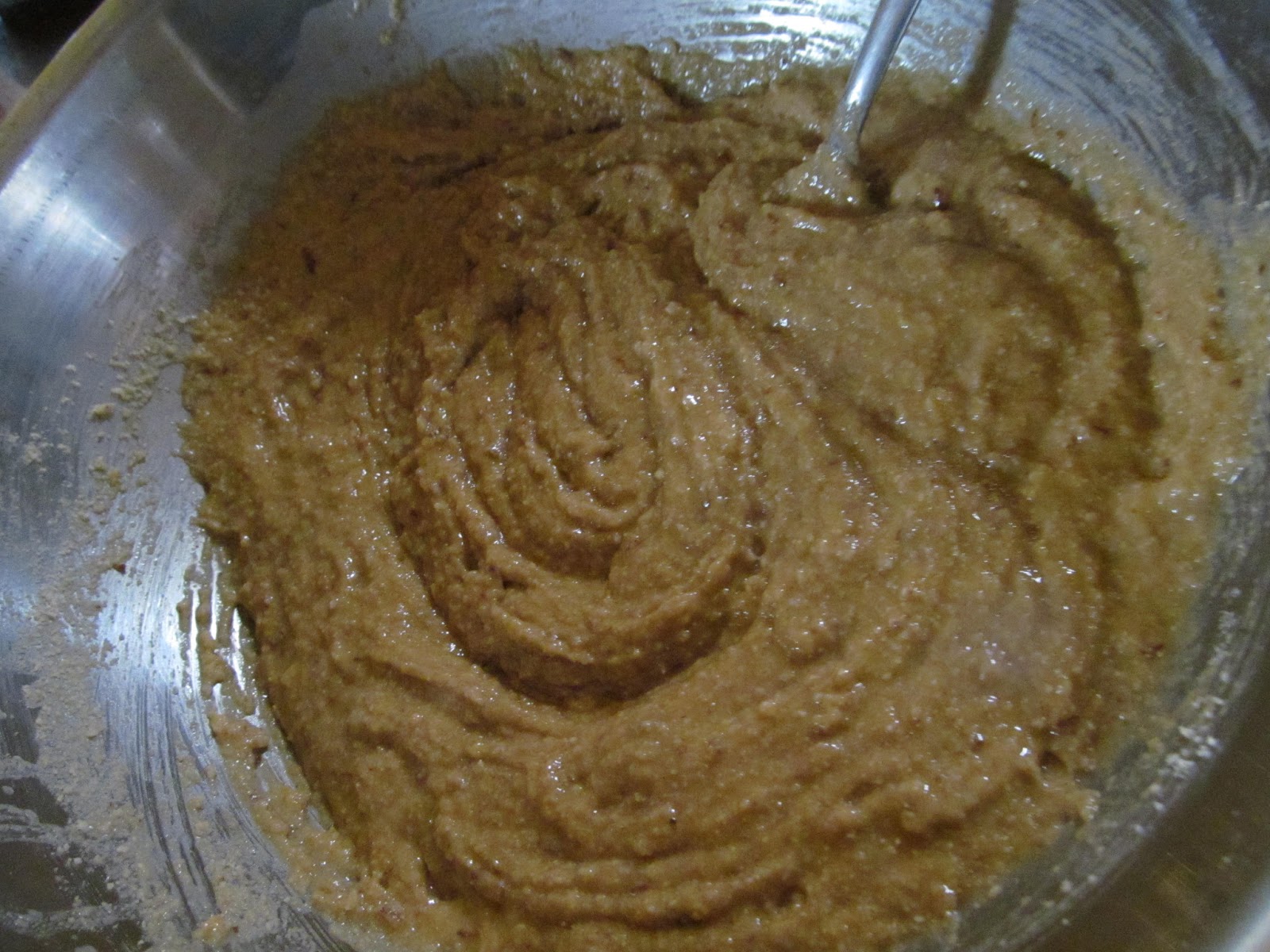
2. Add wet ingredients (water, oil & vanilla) & mix together.


3. Add the wet ingredients to the dry ingredients and mix until all combined.


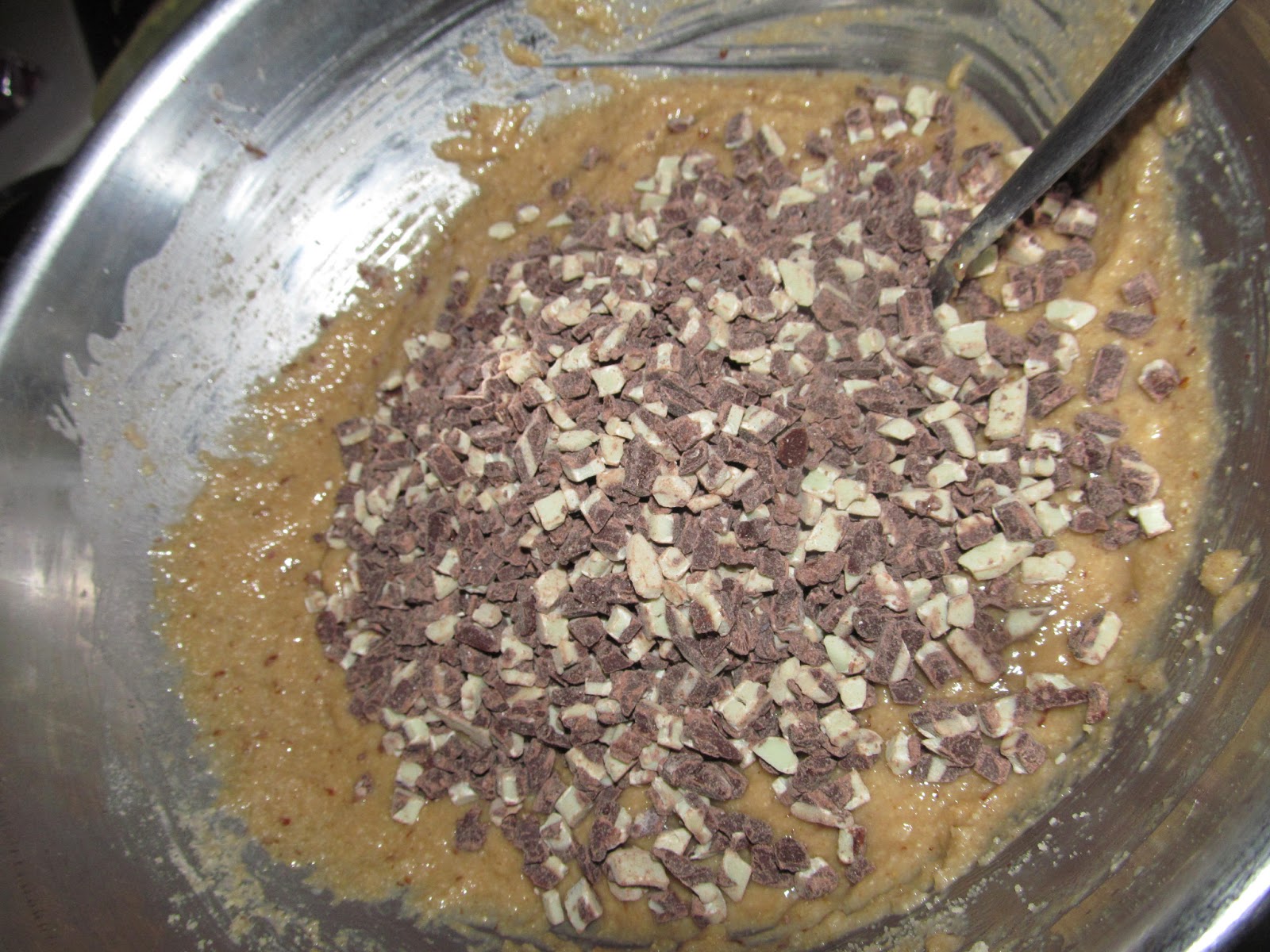
4. Add the chocolate chips and mix until well combined. I used peppermint/chocolate chips and they were AMAZING!


5. Place on cookie sheets and bake at 375 for 12-15 minutes or until the edges of the cookies are golden brown. Remove from pan, place on cooling rack and let set for 10-15 minutes.


(As a side note: These cookies are also good if you do not add any chips to them. I set aside some of the dough and added chocolate to it for O, because he cannot have the chocolate chips due to the dairy in them.)


(Original recipe was found here, but I revised a lot of it).

Enjoy!

Country Girl Designs

Saturday, November 26, 2011

Gluten-Free & Dairy-Free Thanksgiving!

We had quite the Thanksgiving get together on Thursday. Lots of food. Lots of family & friends. Lots of fun.

One requirement we had for those who contributed to the meal was that everything had to be gluten-free and (cow milk) dairy-free. It was quite easy to do and very delicious! So, here are a lot of pictures from the day.

We also had an extra challenge in the food department - we had to make a lot of dishes GAPS diet approved, since my brother, dad, sister, aunt, cousin, and a couple friends are on this diet. This wasn't too hard, since all the meat was homegrown meat, and we make everything from scratch. It was just some of the desserts, sweet potatoes, mashed potatoes, etc, that the GAPS diet folks can't eat.

One picture of the big "Happy Thanksgiving" sign we had hanging!


Veggie platters, deviled eggs (made with GAPS friendly mayonnaise), applesauce (also GAPS friendly)


Salad & toppings


Homemade Thousand Island dressing


Fruit salad with 9 different kinds of fruit


Rutabaga


Mashed potatoes and gravy


Green beans with bacon & almonds (the bacon was homegrown & "homesmoked" - very yummy!). Also GAPS friendly.


Meatballs (GAPS friendly)


Strawberry Sauce to put on GAPS Peanut Butter/Squash pancakes


A squash dish for GAPS.


Spaghetti Squash stir fry (also GAPS friendly)


Sweet potatoes with Marshmallows


Cornbread stuffing


Pumpkin Chocolate Chip Muffins, Kefir Biscuits & Apple Muffins


Pickled Beets, Pickled Asparagus, Olives & Pickled Corn


And then the drink counter. We didn't want any soda, since we aren't too fond of all the high fructose corn syrup in the soda, so we made homemade sparkling juice drinks. Sparkling Limeade (some that was both GAPS friendly and then a non-GAPS limeade, since it was made with sugar), Sparkling Apple, Sparkling Cranberry-Peach, Ginger Tea and Peppermint Tea.


We also had Jello dishes (with homemade marshmallows).


And of course, the standard Cranberry Sauce.


Popcorn balls


The meat was all roasted in a deep pit. We had to finish it off in the ovens. But, there was Ham, Deer Roast, Duck & Chicken.


And finally the desserts:

Pumpkin Pies (some GAPS friendly), Apple Pie, Frozen Peanut Butter Pie (GAPS friendly), Cranberry Oatmeal Cookies, Oatmeal Cookie Sandwiches, Whoopie Pies, Peanut Butter Truffles, Chocolate Chip Cookies, Fudge, and Double Chocolate Chip Cookies.


There was so much food that was all so good! We're very blessed! Hope your Thanksgiving was good!


Country Girl Designs

Friday, September 16, 2011

Using Probiotics

International Nutrition sells a good probiotic called Bio-Kult. It is recommended on the GAPS diet by Dr. Natasha Campbell-McBride. I've used it myself a few times. My brother, sister & dad who are on the GAPS diet have not used it, as we feel they get enough probiotic in the homemade kefir & yogurt. And haven't seemed to need anything more. But, I know some friends on the GAPS diet who are using this, because they have more intense bowel issues, which needs more probiotics.

You will of course read differing opinions on almost everything it seems. My Aunt ran across a site that highly discouraged the use of Bio-Kult because of the bifidobacterium in it. The site which discouraged the use of Bio-Kult was a site that strongly supported the SCD (Specific Carbohydrate Diet). That diet is good for some, but it does not do the gut healing which GAPS does. So, I did some research and could not find any other source which said the bifido was bad to have in a probiotic. In fact, I found just the opposite on many sites. I found that it is actually one of the best probiotics.

I went ahead and asked International Nutrition about it, since I figured they would have an answer. They got back with me last week with the answer below (sharing with permission).

There is absolutely no evidence at all the Bifidobacterium are harmful in the SCD, to people with inflammatory bowel disease, to people in general healthy or not. This is simply a myth. Bifidobacterium are used with benefit in people with inflammatory bowel disease, irritable bowel syndrome, and other disorders. I do not know of a case of Bifidobacterium overgrowth. Most people following the SCD just ignore this recommendation from Elaine Gottachall. Numerous children with autism follow the SCD and most of them are on probiotics with Bifidobacterium in them.
Quote from: Dr. Stephen Olmstead, Chief Scientific Officer at Prothera/Klaire Labs (he was asked because they work closely with people on the SCD diet).

I thought I would share with others, in case there is more confusion.


Country Girl Designs

Wednesday, August 24, 2011

How to Deal with Reflux

In light of Monday's post on reflux medications, I thought I would share some of the first options which should be looked at if you have a child who is dealing with reflux.

Reflux, also known as Gastoesophageal Reflux Disease (GERD) is very common. There are many, easy dietary fixes that work most of the time. There's a time and place for medication. But, many times an issue such as reflux is easily resolved just by changing the diet. And also looking into other health problems.

The first three things I ask when talking to someone about reflux is:

-Is the child dairy free (cow-milk based dairy products in particular)?

This is an extremely common problem. It's either a milk allergy, lactose intolerance (SO common!), casein intolerance, or the child's digestive tract just has issues digesting dairy. Cow milk-based products, in particular, are very hard to digest and cause a lot of irritation in the GI tract.

Going dairy free is really not that hard. It's nice if you can have something to replace the cow-milk dairy. We raise goats for that reason. But, there is also almond milk, rice milk and soy milk. Although, I recommend staying away from soy because of it's negative affects on the thyroid.

-Is the child gluten free (wheat, barley & rye)?

Gluten intolerances, Celiac Disease or a gluten allergy are all extremely common in both the population with DS and the general population. A gluten intolerance or Celiac Disease often times go hand-in-hand with a dairy intolerance. The proteins are very similar and therefore equally hard to digest. Gluten can cause a lot of GI issues, with reflux being one of them.

Going gluten free is a little more challenging than going dairy free. But, it's really not all that hard either. Our whole family (13 of us!) are gluten-free. Initially it was a little overwhelming, but there is so much you can do to replace gluten, it's quite easy. It just takes making things a little differently. Because gluten intolerance and Celiac Disease is so common, there are many equivalents to the regular gluten-made foods. Everything is made with rice flour, sorghum flour, potato starch, garbanzo bean flour, cornmeal, corn flour, xanthan gum, guar gum, etc. It just takes learning what to use differently.

-Does the child have any thyroid problems?

This is something that one may not initially think is involved with reflux, but it is. Especially hypothyroidism or a high TSH. This would definitely be something to look into, if you haven't already.

Taking thyroid medications is a quick way to fix the thyroid. Although, one must be careful when treating the thyroid with medications, if there is not a true thyroid problem (such as JUST a high TSH, but no other symptoms).

Coconut Oil also really helps deal with the thyroid and keep it under control. Low Zinc and Iron also play a big role in a high TSH and poor thyroid function. Those would be two other things to get tested and look into supplementing with them.

You can also go to the extreme of trying a gut healing diet, such as the GAPS diet, for dealing with reflux.
This will help with the reflux, because it will deal with healing the whole gut and get to the core of the issue, as to why there is any reflux.

Some links for the GAPS diet are:

www.gapsguide.com
www.gaps.me
www.gapsdiet.com

Personally, I'd try the top 3 things first - dairy, gluten & thyroid - and then look into doing the extreme of a gut healing diet. This is what we've done and so far, O is not on the GAPS diet. He may be on it someday, but as of right now, he is doing really well avoiding cow (& sheep!) dairy, gluten, and has a good TSH.


Country Girl Designs

Monday, August 22, 2011

Deficiencies caused by Reflux Medications

Reflux can be a common problem in people with Down Syndrome. I know it's a topic which is talked about often on many of the DS listservs I'm on. And I reference this information frequently, so I thought it would be good to do a blog post about it.

Many people end up on Reflux medications, instead of looking at possible issues in the diet & body for why there may be reflux. While reflux medications may be important for some, they cause a myriad of nutrient deficiencies, which in turn can lead to many health problems.

There are many things that can be looked at to try to figure out why there is reflux in the first place and other non-medication related ways to deal with it. I'll save that information for a separate post though!

For now, here is the list of reflux medications and all the nutrients the deplete.

List of Deficiencies caused by Reflux Drugs:

Acid-Reducing Drug Nutrient Depletion

Proton Pump Inhibitors:
Omeprazole (Prilosec®)
Lansoprazole (Prevacid®)
Pantoprazole (Protonix®)
Rabeprazole (Aciphex®)
Esomeprazole (Nexium®)

Histamine Antagonists:
Cimetidine (Tagamet®)
Famotidine (Pepcid®)
Nizatadine (Axid®)
Ranitidine (Zantac®)

----------------------

Vitamin B12 (1, 10,11,12)
Depletion of vitamin B12 includes: Fatigue, Peripheral Neuropathy, Tongue and mouth irregularities, Macrocytic anemia (abnormally enlarged red blood cells), Depression, confusion and memory loss (especially in the elderly), Poor blood clotting and easy bruising, Dermatitis and skin sensitivity, Loss of appetite, Nausea, and Vomiting.

Beta-Carotene (1, 13)
Beta -carotene depletion may cause a weaker immune system , and cancer.

Vitamin B12 (1, 2)
Anemia, tiredness, weakness, peripheral neuropathy, tongue and mouth irregularities, enlarged red blood cells (macrocytic anemia), depression, confusion, memory loss, poor blood clotting or easy bruising, dermatitis, skin sensitivities, loss of appetite, nausea, vomiting

Folic Acid (1, 3)
megaloblastic anemia, birth defects, cervical dysplasia, elevated homocysteine, headache, fatigue, hair loss, anorexia, insomnia, diarrhea, nausea, increased infections

Iron (1, 4)
Menstrual bleeding, pagophagia (consuming large quantities of ice), hypochlorhydria, diarrhea, intestinal inflammation, hair loss

Calcium (1, 6, 7)
Rickets, osteoporosis, magnesium deficiency, intestinal inflammation increased phosphorus ingestion (with soft drinks etc.), increased caffeine intake, excess dietary fat and fiber, lack of exercise.

Vitamin D (1, 8)
Rickets, low dietary Vitamin D intake, limited sun exposure, kidney or liver malfunctions, osteoporosis, osteomalacia, hearing loss, muscle weakness, severe tooth decay, phosphorus retention

Zinc (1)
Acne, impaired sense of taste and smell, delayed wound healing, anorexia, decreased immunity, frequent infections, depression, photophobia, night blindness, skin, hair, and nail problems, menstrual problems, joint pain, involuntary eyeball movements (nastagmuas).

1.Pelton R., La Valle JB, Hawkins EB, et al. Drug Induced Nutrient Depletion Handbook. 1999-2000. Lexi-Comp,Inc. pp. 250-53, 262-69, 294-97, 300-07, 404-410, 426.
2.Force RW, Nahata MC. "Effect of H2-Receptor Antagonists on Vitamin12 Absorption." Ann Pharmacotherapy. 1992. 26(10): 1283-86.
3.Russel RM, Golner BB, Krasinski SD , et al. "Effect of Antacids and H2 Receptor Antagonists on the Intestinal Absorption of Folic Acid." Journal of Laboratory and Clinical Medicine. 1988. 112(4): 458-63.
4.Campbell NR, Hasinoff, Meddings JB, et al. "Ferrous Sulfate Reduces Cimetidine Absorption." Digestive Disease and Sciences. 1993. 38(5): 950- 54.
5. Partlow ES, Campbell NR, Chan SC , et al. "Ferrous Sulfate Does Not Reduce Serum Levels of Famotidine or Cimetidine After Concurrent Investigation. Clinical Pharmacology and Therapeutics. 1996. 59(4): 389-93.
6.Bo-Linn GW, Davis GR, Buddrus DJ, et al. "An Evaluation of the importance of Gastric Acid Secretions in the Absorption of Dietary Calcium." Journal of Clinical Investigation. 1984. 73(3): 640-47.Â
7.Merenich JA, Georgitis WM, and Clark JR. "Failure of Cimetidine to Reduce Postoperative Hypocalcemia in Patients With Primary Hyperparathyroidism Undergoing Neck Exploratory Surgery." Surgery. 1993. 133(6): 619-23.
8.Bengoa Jm, Bolt MJ, and Rosenberg IH. "Hepatic Vitamin D 25 Hydroxylase Inhibition by Cimetidine Isoniazid." Journal of Laboratory and Clinical Medicine. 1984. 104(4): 546-52.
9. Lacy CF, Armstrong LL, et al. Drug Information Handbook. 1999-2000. Lexi-Comp, Inc. pp. 174, 424, 480, 512, 585, 1239.
10.Bellou A, Aimone-Gastin I, De Kowin JD, et al, "Cobalamin Deficiency With Megaloblastic Anemia in One Patient Under Long-Term Omeprazole Therapy," J Intern Med, 1996, 240(3):161-164.
11.Mercuard SP, Albernaz L, and Khazanie PG, "Omeprazole Therapy Causes Malabsorption of Cyanocobalamin," Ann Intern Med, 1994, 120(3):211-5.
12.Termanini B, Gibril, Sutliff VE, et al, "Effect of Long-Term Gastric Acid Suppressive Therapy on Serum Vitamin B12 Levels in Patients With Zollinger-Ellison Syndrome," Am J Med, 1998, 104(5):422-30.
13.Tang G, Serfaty-Lacrosniere C, Camillo ME, et al.  "Gastric Acidity Influences the Blood Response to a Beta-Carotene Dose in Humans,"  Am J Clin Nutr, 1996, 64(4):622-6.


Country Girl Designs

Monday, July 18, 2011

Using Natural Beef & Organic Meats: The GAPS Diet

The weeks have been flying by and the blog posts have been definitely lacking! I have so many things I'd like to blog about. I've gotta get back into the routine of scheduling blog posts, so we'll see :).

Some of my family is on what is called the GAPS diet, or the Gut & Psychology Syndrome Diet. This diet was developed by Dr. Natasha Campbell-McBride. My 19 year old brother has a lot of food allergies and he seemed to just keep getting more. He would cut out one thing, then be good for awhile, then something else would bother him. We've known about the GAPS diet for a few years now, because a lot of people who have kids with DS and/or Autism use it.

The whole focus of the GAPS diet is to heal the gut and restore good gut flora & functioning. We've tossed around the idea of doing it with O for a few years because of his reflux problems. But, each time we think about doing it, we end up finding out what is causing his reflux problems. As of right now that's just gluten & cow dairy, so he has not gone on it yet. At some point, he may, but we don't feel it's absolutely necessary right now.

But, it is for my 19 year old brother, Norayah. He finally said, "Put me on the GAPS diet." It's been almost 2 months now since we started the diet. The diet starts out slow and goes through a series of introductory stages before going onto the full diet. It is recommended to stay on the whole diet for at least 2 years.

A LOT of the diet is meat and it should, ideally be organic meat. For us, this has been pretty easy, as we raise and butcher our own animals for meat.

We had already started doing this, because so much meat has been washed or "contaminated" somehow with corn and Norayah has an intolerance to corn. So, that left us with raising our own sheep, goats, pigs, rabbits & natural beef from cows my cousin raised.

You can buy organic beef online or find other organic meats at local farmer's markets or sometimes a grocery store, but we prefer to just raise our own.

And it has proven very beneficial and helpful in this diet. Another large part of the diet is vegetables and it all has to be cooked. The first stage is just meat broth (soup) with a few select veggies on it. As you change through the 6 stages of the introduction diet, you slowly add in more vegetables, eventually fruits, casserole dishes, etc.

The diet is pretty strict, but it works to heal the gut. Anyone with a family member or kid who has food allergies, candida gut issues, or pretty much any other major health problem or gut issue, should try the GAPS diet. It's helped a lot of people! We've seen some changes from it and the "die-off" effects of the diet thus far.

One good thing out of it so far: Norayah used to get heartburn from lemon juice. Well, we introduced it in the diet last week and he has not had any heartburn yet! That is very promising.

A few good helpful links for the diet:
gapsdiet.com
gaps.me
GAPS Guide
GAPS help Yahoo! Group

I will share more information as time goes on, Lord willing, with recipes and more information.

Disclaimer: This post is compensated by a blogger campaign from Bucks2Blog. This has no affiliation or compensation from those who developed the GAPS diet, it is strictly compensated by those who want to encourage using natural beef.  All the views & opinions are my own.

Photobucket

Related Posts with Thumbnails